
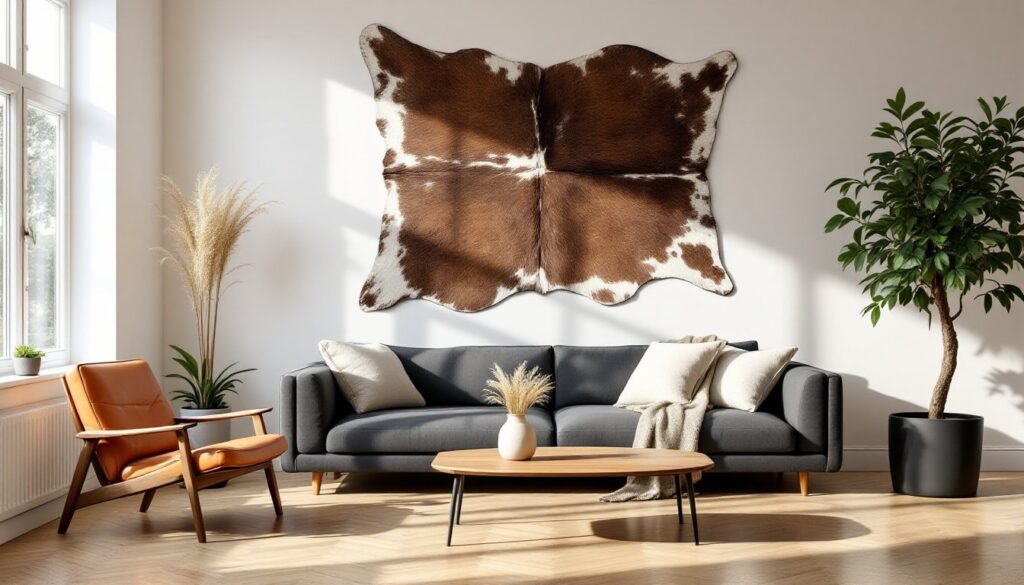
Cowhide isn’t just for floors anymore. Interior designers and DIY enthusiasts are rediscovering cowhide as versatile wall art that bridges rustic, modern, and even bohemian aesthetics. Unlike mass-produced prints, each cowhide offers unique patterns and textures that bring warmth and character to any space. Whether working with a full hide, partial sections, or creative displays, homeowners can achieve a high-impact look without major renovations. This guide explores practical cowhide wall decor ideas, installation methods, and design considerations that make this material work in real homes.
Key Takeaways
- Cowhide wall decor bridges rustic, modern, and bohemian design styles while offering unique patterns and textures that bring warmth and character to any interior space.
- Each cowhide pattern—from black-and-white Holstein to brindle to solid colors—works in different room types, with brindle patterns particularly suited for transitional and farmhouse aesthetics.
- Cowhide wall hanging installations require mounting to wall studs using cleats, D-rings, or decorative tacks spaced 6-8 inches apart, with hides typically weighing 10-15 pounds.
- Strategic placement behind sofas, above fireplaces, or as bedroom headboards creates instant focal points without consuming floor space, making cowhide ideal for smaller homes and apartments.
- Proper maintenance involves occasional vacuuming and spot-cleaning with mild soap and water, while keeping cowhide away from direct sunlight and heat sources to preserve appearance for 15-20 years.
Why Cowhide Wall Art Is Making a Comeback
The resurgence of cowhide wall decor stems from several converging design trends. Biophilic design, the practice of incorporating natural elements indoors, has pushed homeowners beyond houseplants and wood accents toward more tactile, organic materials. Cowhide delivers texture, visual interest, and a connection to natural materials that synthetic alternatives can’t replicate.
From a practical standpoint, cowhide offers durability that canvas or paper prints lack. A properly tanned hide resists fading, doesn’t require framing, and maintains its appearance for decades with minimal maintenance. This longevity appeals to homeowners investing in quality statement pieces rather than disposable decor.
The material also bridges multiple design styles. A black-and-white cowhide complements Scandinavian minimalism. Brindle or tricolor patterns work in farmhouse or transitional spaces. Exotic patterns like zebu or dyed hides fit eclectic or maximalist interiors. This versatility allows cowhide to anchor a room’s aesthetic or serve as a neutral backdrop for evolving decor.
Unlike large furniture pieces, wall-mounted cowhide doesn’t consume floor space, a critical advantage in smaller homes or apartments. It provides the visual impact of a major design element while keeping square footage open.
Stunning Cowhide Wall Hanging Ideas for Every Room
Living Room Statement Pieces
The living room offers the most opportunities for dramatic cowhide displays. A full hide (typically 6-8 feet in length) mounted behind a sofa creates an instant focal point that grounds the seating area. The irregular, organic shape softens the hard lines of modern furniture and adds dimension to flat walls.
For gallery wall installations, consider cutting a hide into geometric panels, squares, rectangles, or hexagons, and mounting them in a grid pattern. This approach works particularly well with brindle or solid-colored hides, where the consistent base tone unifies the composition while individual hair patterns provide subtle variation. Space panels 2-3 inches apart for a modern, gallery-style presentation.
Above a fireplace mantel, a horizontally oriented hide (or a partial section trimmed to fit) emphasizes the room’s width and complements the hearth’s natural materials. Ensure adequate clearance from heat sources, at least 36 inches from active fireplaces to prevent heat damage to the hide.
Bedroom and Home Office Applications
In bedrooms, cowhide serves as an alternative to traditional headboards. Mount a hide directly to the wall behind the bed, centering it at mattress height. The natural texture adds warmth without the bulk of upholstered headboards, and the installation takes less than an hour with proper mounting hardware.
For smaller bedrooms or guest rooms, consider a half-hide or shoulder section mounted vertically. These partial hides (roughly 3-4 feet in length) provide visual interest without overwhelming limited wall space. They work particularly well flanking windows or filling narrow wall sections between doorways and corners.
Home offices benefit from cowhide’s sound-dampening properties. A hide mounted on the wall behind a desk absorbs ambient noise better than hard wall surfaces, creating a quieter workspace. Choose patterns that don’t create visual distraction, solid grays, browns, or subtle brindles work better than high-contrast black-and-white hides in work environments where focus matters.
In dual-purpose rooms, cowhide can define zones. A hide mounted on the wall separating a bedroom’s sleeping area from a reading nook or workspace provides a soft visual boundary without the commitment of permanent partitions.
Creative Ways to Display Cowhide on Your Walls
Beyond straightforward mounting, several display methods offer unique aesthetic results. Stretching a hide over a wooden frame creates a finished, art-piece appearance similar to canvas stretching. Build a frame from 1×2 or 1×3 furring strips (actual dimensions 3/4″ x 1-1/2″ or 3/4″ x 2-1/2″), assemble with corner braces, and staple the hide to the back side. This method allows easy removal and protects wall surfaces in rentals.
For industrial or loft-style spaces, suspend a hide from a wall-mounted rod or pipe using leather straps or large binder clips. This creates intentional movement and emphasizes the hide’s organic shape. Use black iron pipe or brass rods to match existing hardware finishes.
Layering cowhide with other materials adds depth. Mount a hide on a contrasting painted background, a charcoal wall behind a light brindle hide, or crisp white behind black-and-white patterns. Alternatively, layer a smaller hide over reclaimed wood planks or shiplap for a multi-textural effect.
Shadow box installations work well for exotic or high-contrast hides. Build a deep frame (3-4 inches) that allows the hide to float slightly away from the wall, creating dramatic shadows. This approach highlights the hide’s three-dimensional texture and works particularly well with directional lighting.
For renters or commitment-averse decorators, large Command picture-hanging strips or removable adhesive hooks allow installation without drilling. Test adhesive capacity with hide weight first, most full hides weigh 10-15 pounds, requiring heavy-duty strips rated for 16+ pounds.
Choosing the Right Cowhide Pattern and Color for Your Interior
Pattern selection should account for room size, existing color schemes, and desired visual impact. Black-and-white or Holstein patterns create high contrast suitable for modern, minimalist, or monochromatic spaces. They read as bold graphic elements and work best in rooms with neutral furniture where the hide becomes the primary focal point.
Brindle patterns (brown, tan, and black streaking) offer warmth and versatility. They complement wood tones, leather furniture, and earth-toned palettes common in transitional, farmhouse, or Southwestern interiors. Brindle hides have enough pattern variation to add interest without demanding attention.
Solid or near-solid hides (grays, browns, creams) function more like textured neutrals. They add tactile dimension without competing with patterned textiles, artwork, or statement furniture. These work particularly well in maximalist spaces where additional bold patterns would create visual chaos.
For adventurous decorators, dyed or metallic hides (gold, silver, turquoise) serve as statement pieces in eclectic or bohemian rooms. These require careful coordination, let the hide dictate accent colors in pillows, throws, or small decor items rather than introducing additional competing hues.
Consider the hide’s hair direction and shading when selecting orientation. Most hides show subtle color shifts when viewed from different angles due to hair lay. Test orientation before permanent mounting by temporarily hanging the hide and viewing it from primary seating positions.
Room lighting affects pattern perception. North-facing rooms with cooler light enhance contrast in black-and-white hides. South-facing rooms with warm light make brindle patterns appear richer. In rooms with limited natural light, avoid very dark hides that may appear muddy: choose lighter patterns that reflect available light.
Installation Tips and Mounting Techniques
Proper mounting ensures the hide hangs flat, stays secure, and doesn’t damage walls. Start by locating wall studs with a stud finder, hides require solid anchoring, not just drywall. Mark stud locations with painter’s tape.
For full-hide installations, use a mounting cleat system: attach a 1×2 board horizontally to the wall, screwed into studs with 3-inch wood screws. Staple or tack the top edge of the hide to a matching cleat board, then hang the hide’s cleat onto the wall cleat. This distributes weight evenly and allows easy removal.
Alternatively, install heavy-duty D-rings or sawtooth hangers on the hide’s top edge (if it’s been backed with fabric or thin plywood). Use corresponding wall hooks screwed into studs. Space hooks 16-24 inches apart for full hides.
For hides without backing material, upholstery tacks or decorative nailheads can be driven through the hide’s edge directly into studs. Use brass or nickel finish tacks that complement the room’s hardware. Space tacks 6-8 inches apart along the top edge, keeping the hide taut but not stretched unnaturally.
Safety note: Wear leather work gloves when handling hides to avoid hair splinters, and use a dust mask if trimming or drilling through the hide, leather dust can irritate airways.
In rooms without conveniently located studs, install a horizontal backing board (1/2-inch plywood or MDF) across the desired mounting area, secured to studs at each end and with drywall anchors in between. This creates a solid mounting surface anywhere on the wall.
Before finalizing placement, hang the hide temporarily with removable hooks and live with it for a day or two. Cowhides have significant visual weight: what looks balanced while measuring might feel off-center once installed. Adjust placement before committing to permanent mounting.
For hides that curl at the edges, weight the bottom edge with a thin rod inserted into a hem sewn or glued along the hide’s bottom. A 1/4-inch wooden dowel or metal rod adds just enough weight to encourage the hide to hang straight without visible hardware.
Maintenance is minimal: vacuum occasionally with a brush attachment, spot-clean spills immediately with damp cloth and mild soap, and keep hides away from direct sunlight to prevent fading. Properly installed and maintained, a cowhide wall installation can last 15-20 years while retaining its appearance and texture.