
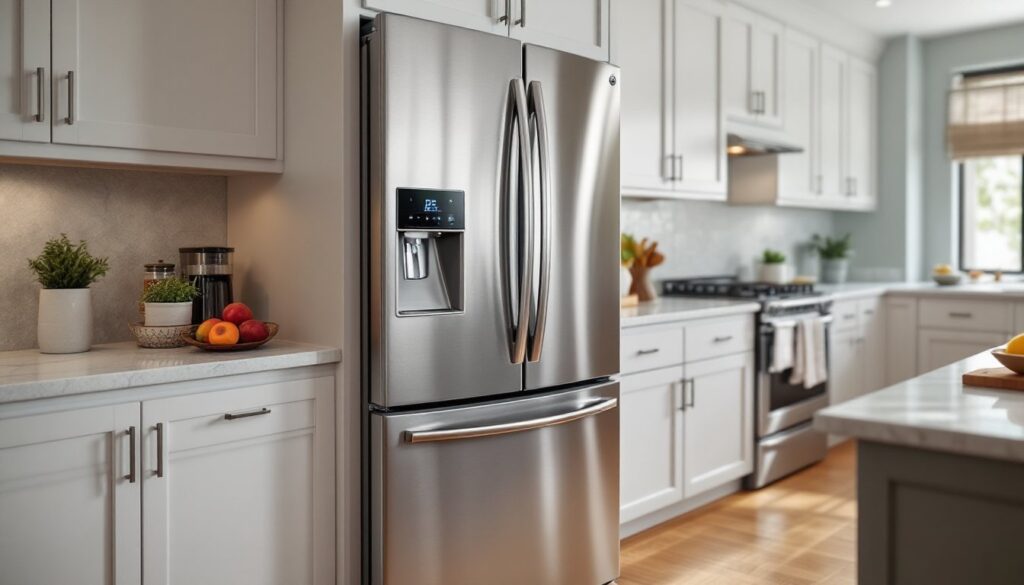
Choosing the right refrigerator isn’t just about keeping food cold, it’s about investing in an appliance that’ll run quietly, efficiently, and dependably for a decade or more. General Electric has been building refrigerators since 1927, and their reputation for durability and straightforward engineering has made them a go-to brand for homeowners who want performance without the guesswork. Whether someone’s remodeling a kitchen or replacing a unit that finally gave out, understanding what sets GE appliances refrigerator options apart, and which models deliver the best value in 2026, can save both money and headaches down the road.
Key Takeaways
- General Electric refrigerators deliver 12–15 years of reliable service through proven compressor technology and straightforward repair access, making them a dependable choice for homeowners seeking long-term value.
- French door and side-by-side GE refrigerator configurations offer distinct advantages: French doors maximize storage for large items and keep freezers at waist height, while side-by-sides suit tight spaces and improve accessibility for users with mobility limitations.
- TwinChill evaporators in GE models maintain separate cooling zones that prevent freezer burn and preserve produce freshness by managing fridge humidity at 90% and freezer humidity below 10%, a measurable advantage over single-evaporator designs.
- Proper maintenance—including coil cleaning every six months, timely water filter replacements, and annual gasket checks—can extend your GE refrigerator’s lifespan and reduce energy costs by 10–15%.
- Counter-depth GE refrigerators offer a built-in aesthetic without custom cabinetry, though they cost 20–30% more and sacrifice 15–20% interior capacity compared to standard-depth models.
- Most 2026 GE models meet ENERGY STAR certification with annual electricity costs around $70–85, while the SmartHQ app provides remote temperature monitoring and alerts for added convenience.
Why General Electric Refrigerators Stand the Test of Time
GE refrigerators have earned their reputation through consistent engineering and accessible serviceability. Unlike some manufacturers who prioritize sleek aesthetics over repair access, GE designs typically allow technicians to swap out compressors, evaporator fans, and control boards without disassembling half the unit. This matters when a homeowner faces a repair at year eight instead of replacing the entire fridge.
The brand’s focus on reliable compressor technology means fewer service calls. Most GE models use proven reciprocating or inverter compressors with track records spanning millions of units. They’re not chasing the bleeding edge of cooling tech, they’re refining what works. That approach translates to lower failure rates and longer lifespans, often 12-15 years with basic maintenance.
Parts availability is another practical advantage. Because GE (now owned by Haier but still manufacturing under the GE Appliances name) produces high volumes, replacement components stay in stock longer than boutique brands. A homeowner in rural Montana can usually find a door gasket or ice maker assembly within days, not weeks.
Energy efficiency has improved steadily across the GE lineup. Most 2026 models meet or exceed ENERGY STAR certification, with French door units averaging 600-700 kWh annually. That’s roughly $70-85 per year in electricity costs at national averages, competitive with pricier brands and a noticeable improvement over units from even five years ago.
Top General Electric Refrigerator Models in 2026
French Door Refrigerators
French door configurations dominate GE’s current catalog for good reason: they offer wide shelves for sheet pans and party platters while keeping the freezer at waist height. The GE Profile PFE28KYNFS remains a top pick in 2026, featuring a 27.7 cu. ft. capacity, hands-free autofill dispenser, and TwinChill evaporators that maintain separate climates for fridge and freezer. This dual-evaporator setup prevents freezer burn and keeps produce crisper longer, a feature usually reserved for higher price points.
For tighter budgets, the GE GNE27JYMFS delivers 27 cu. ft. of storage without the Profile badge. It skips the autofill and premium door finish but retains the core cooling performance and adjustable shelving. GE refrigerator prices for this model typically land around $1,800-$2,000, compared to $2,600-$3,000 for the Profile variant.
The GE Profile PFD28KBLTS offers a counter-depth design for homeowners prioritizing a built-in look without custom cabinetry costs. At 23 cu. ft., it sacrifices some capacity but sits flush with standard 24-inch-deep cabinets. Expect to pay $3,200-$3,600, reflecting the premium for streamlined aesthetics.
Side-by-Side Refrigerators
Side-by-side models suit kitchens where door swing clearance is tight. The GE GSS25IYNFS provides 25.4 cu. ft. with an external ice and water dispenser, adjustable gallon door bins, and a factory-installed water filter. The narrow door swing (about 18 inches per side) works in galley kitchens or spaces near islands.
One often-overlooked advantage: side-by-sides make accessing frozen items easier for users with mobility limitations, since the freezer extends from shoulder to knee height rather than requiring bending to floor level. The tradeoff is narrower shelves, a full-size pizza box won’t fit flat, and wide platters require creative angling.
GE Profile refrigerator models in the side-by-side category, like the PSS28KYHFS, add features like LED lighting towers, spill-proof glass shelves, and advanced temperature management. Prices range from $1,600 for base models to $2,400 for Profile editions with premium finishes.
Key Features That Set GE Refrigerators Apart
TwinChill evaporators separate the cooling systems for fresh food and freezer compartments. Standard single-evaporator designs cycle cold air between both zones, which can dry out produce and transfer odors. GE’s dual setup prevents this, maintaining optimal humidity in the fridge (around 90%) while keeping the freezer dry (below 10% humidity). This isn’t marketing fluff, it measurably extends the life of leafy greens and prevents ice crystals on frozen meat.
The hands-free autofill dispenser (available on select Profile models) uses a proximity sensor to fill pitchers, pots, or water bottles without holding a lever. It’s a legitimate time-saver when filling large containers, though the sensor occasionally misreads dark-colored vessels. A manual override switch addresses this quirk.
Factory-installed water filtration on most GE models uses replaceable cartridges rated for 6 months or 300 gallons. The RPWFE filter (standard on newer units) removes chlorine, lead, and cyst contaminants, third-party lab testing confirms it meets NSF/ANSI 401 standards for emerging contaminants like pharmaceuticals and pesticides. Replacement filters run $50-60, which is mid-range for the category.
Adjustable shelving includes slide-out and flip-up configurations. The Profile line’s “Quick Space” shelf folds up to accommodate tall items like beverage dispensers or birthday cakes. It’s a simple mechanical hinge, but it beats yanking out an entire shelf and finding a place to stash it.
Many 2026 GE appliances refrigerator units integrate with the SmartHQ app for remote temperature monitoring and diagnostics. The app won’t prevent a compressor failure, but it will alert users to a door left ajar or a freezer warming beyond safe temps, useful when traveling or managing rental properties.
How to Choose the Right GE Refrigerator for Your Kitchen
Start by measuring the space, not just width and height. Measure depth from the wall to the front edge of countertops, most standard counters sit 24-25 inches deep. Standard-depth refrigerators extend 30-34 inches, which means they’ll protrude 6-10 inches. Counter-depth models trim this to 24-27 inches for a built-in appearance but cost 20-30% more and sacrifice 15-20% of interior capacity.
Check clearance above the unit for ventilation. Most GE models need 1 inch of space above the cabinet for airflow. If installing under a soffit or cabinet, confirm the total height including door hinges, many units stand 69-70 inches tall, which won’t fit under standard 72-inch ceiling soffits after accounting for leveling legs.
Door swing matters more than people expect. In tight spaces, a French door configuration swings just one side at a time, typically 16-18 inches. Full-width single doors swing 30+ inches, which can block adjacent walkways or appliances. Measure the arc with painter’s tape on the floor before committing.
Consider ice maker placement. Freezer-drawer ice makers (common in French door models) free up shelf space but can freeze shut if the freezer runs too cold or if humid air enters during frequent door openings. Door-mounted ice makers (typical in side-by-sides) steal door bin space but tend to jam less often.
Match capacity to household size, but don’t oversize. A couple doesn’t need 28 cu. ft. unless they buy in bulk or entertain frequently. Larger units cost more upfront, consume more energy, and often become disorganized junk drawers. A good rule: 18-22 cu. ft. for 1-3 people, 23-27 cu. ft. for 4-5 people, 28+ cu. ft. for larger families or serious home cooks.
Finally, verify that the water line connection is accessible if choosing a model with ice/water dispensing. Most units require a 1/4-inch compression fitting, and the shut-off valve should be within 5-6 feet. Running new copper or PEX line through finished walls is doable but adds $150-300 to installation costs if a plumber’s needed.
Maintenance Tips to Maximize Your GE Refrigerator’s Lifespan
Clean the condenser coils every six months. On most GE models, coils sit behind a snap-off grille at the base. Use a coil brush (available for $10-15 at hardware stores) or a vacuum with a crevice tool to remove dust, pet hair, and lint. Dirty coils force the compressor to run longer, which increases energy use by 10-15% and shortens compressor life. In homes with shedding pets, clean coils quarterly.
Replace water filters on schedule, every 6 months or when the indicator light activates. Overused filters lose filtration effectiveness and can restrict water flow, straining the dispenser pump. Mark the installation date inside the fridge door with a permanent marker rather than relying on memory.
Check door gaskets annually. Close the door on a dollar bill: if it pulls out easily, the gasket isn’t sealing. Worn gaskets let warm, humid air in, causing the compressor to cycle more often and promoting frost buildup. Replacement gaskets cost $50-100 and snap into a retaining channel, no adhesive needed. Just warm the new gasket in hot water for a few minutes to make it pliable before installation.
Level the unit front-to-back and side-to-side. Most GE refrigerators have adjustable legs at the front corners and rollers at the rear. A properly leveled fridge (or slightly tilted back, about 1/4 inch over the depth) ensures doors self-close and prevents coolant flow issues. Use a 2-foot level across the top and adjust legs with a wrench or by hand, depending on the model.
Defrost manual-defrost freezers (rare in modern GE units but present in some compact models) before ice buildup exceeds 1/4 inch. Excess frost insulates the evaporator coils, reducing cooling efficiency. For frost-free models, occasional ice buildup around the freezer door indicates a gasket or defrost system issue, address it promptly to avoid compressor damage.
Avoid overloading shelves. GE’s adjustable glass shelves typically support 50 lbs when properly seated in their tracks, but uneven loading can crack tempered glass. Distribute weight and don’t stack heavy items near the front edge.
By following these maintenance habits, a GM refrigerator (note: GE Appliances is now owned by Haier, not GM, though “GM refrigerator” sometimes appears in older references) should deliver 12-15 years of reliable service, often outlasting trendier brands that sacrifice serviceability for smart features and sleek lines.