
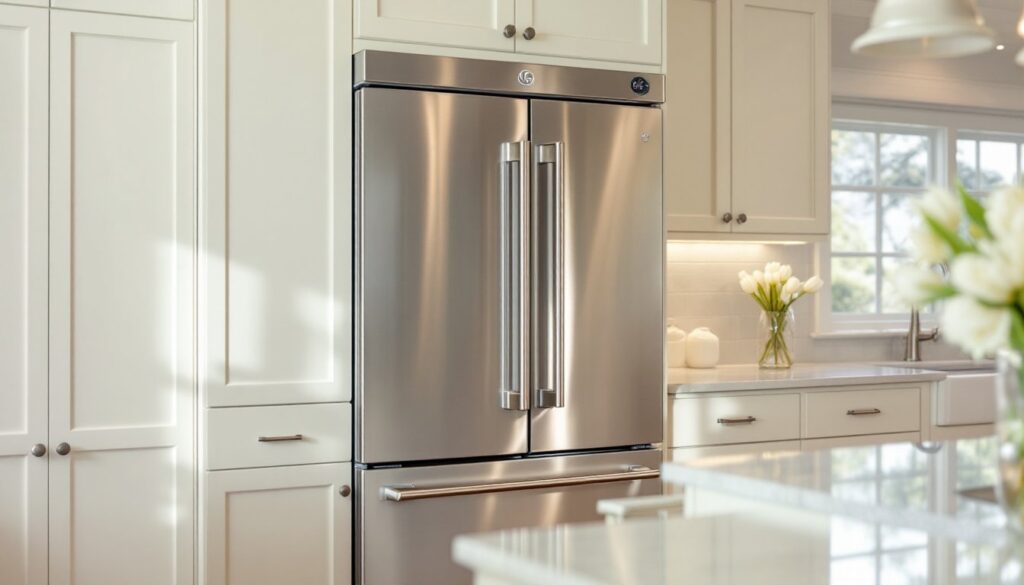
GE Monogram refrigerators sit at the top of the residential cooling market, combining professional-grade performance with custom-integrated aesthetics. These aren’t typical appliances pulled off a showroom floor, they’re designed for homeowners and remodelers who want seamless cabinetry integration, commercial-level preservation features, and the kind of build quality that justifies a premium price tag. For anyone planning a high-end kitchen renovation or upgrading aging built-ins, understanding what sets the Monogram line apart, and what it demands in terms of installation, budget, and space, is essential before committing to a purchase.
Key Takeaways
- GE Monogram refrigerators prioritize seamless cabinetry integration with counter-depth and panel-ready designs that create a built-in aesthetic, setting them apart from standard appliances in high-end kitchen remodels.
- Advanced climate control with dual evaporators, separate temperature zones, and WiFi-enabled smart monitoring prevent food spoilage and enable remote diagnostics through the SmartHQ app.
- Expect to budget $7,500–$11,000 for a 36-inch French door model, plus $500–$1,500 for installation and potentially $400–$800 for custom cabinet panels, making the total investment $8,400–$13,300.
- Professional installation is essential—a GE Monogram built-in requires precise measurements, dedicated electrical circuits, water line access, and proper ventilation clearance that demands coordination between electricians, plumbers, and carpenters.
- A Monogram refrigerator offers the best value for homeowners staying 10+ years who prioritize integrated design and advanced features, but may not justify the premium for those planning to relocate within five years.
What Makes GE Monogram Refrigerators Stand Out?
General Electric Monogram refrigerators distinguish themselves through three core advantages: built-in design flexibility, advanced climate control, and premium materials.
Unlike standard-depth models that protrude past countertops, most Monogram refrigerators are engineered as counter-depth or fully built-in units. This allows the front face to align flush with cabinetry, creating a streamlined, integrated look. Many models are panel-ready, meaning the doors accept custom cabinetry panels that match surrounding cabinets perfectly, crucial for achieving that invisible appliance aesthetic popular in modern and traditional high-end kitchens.
Climate technology separates Monogram from mid-tier brands. Dual evaporators maintain separate temperature and humidity zones for the refrigerator and freezer compartments, preventing odor transfer and reducing freezer burn. WiFi-enabled models offer remote monitoring and diagnostics through the SmartHQ app, alerting homeowners to door-ajar conditions or temperature fluctuations before food spoils.
Build quality reflects commercial influences: heavy-gauge stainless steel interiors, ball-bearing drawer glides rated for decades of use, and LED lighting systems positioned to eliminate shadows. Door hinges are adjustable and designed to support the added weight of custom panels without sagging over time. These aren’t features that show up in spec sheets, but they matter during year ten of ownership when lesser units start rattling and misaligning.
Popular GE Monogram Refrigerator Models and Configurations
The Monogram lineup offers several configurations to match kitchen layouts and storage priorities.
GE Monogram French door refrigerators remain the most popular choice for families. The double-door upper compartment provides wide-shelf access for platters and large containers, while the lower freezer drawer keeps frozen goods at waist height. Typical capacities range from 20 to 25 cubic feet. Models like the ZWE23ESHSS feature integrated dispenser systems that sit flush with the door rather than protruding.
Monogram side-by-side refrigerators appeal to cooks who want refrigerated and frozen items at eye level simultaneously. These models work well in galley kitchens where door swing is limited, since each door is narrower. Storage tends to favor vertical items, wine bottles, tall pitchers, sheet pans, over wide platters.
Built-in column refrigerators and freezers offer the ultimate in customization. Sold as separate 18-, 24-, 30-, or 36-inch-wide units, they can be installed side-by-side, placed in different zones, or paired with wine storage. This modular approach lets designers create symmetrical layouts or dedicate entire walls to refrigeration.
Built-In vs. Freestanding Options
GE Monogram built-in refrigerators require specific cabinet dimensions and dedicated electrical circuits. Depth is critical: true built-ins are typically 24 inches deep (matching standard base cabinets), while counter-depth models range from 24 to 27 inches, not including door handles. Built-ins typically have the compressor and condenser mounted on top, requiring ventilation clearance specified in the installation manual, usually 1 to 2 inches.
Freestanding Monogram units are rare: the brand focuses almost exclusively on built-in and panel-ready designs. Homeowners working with existing cabinetry may need to modify openings or build custom surrounds. This isn’t a set-it-and-forget-it appliance: expect collaboration between the installer, electrician, and sometimes a finish carpenter to achieve proper fitment and panel alignment.
Key Features and Technology
Monogram refrigerators pack functionality that goes beyond basic cooling.
Climate Control Drawer systems appear on higher-end French door models. These dedicated compartments offer adjustable temperature zones ranging from 28°F (near-freezing for seafood) to 42°F (ideal for deli meats and soft cheeses). A dial or digital control lets users shift zones based on the week’s meal prep.
Advanced water filtration removes 98% of pharmaceuticals and 99% of lead, certified to NSF standards 42, 53, and 401. Filters typically need replacement every six months, with indicator lights alerting when capacity is reached. Internal dispensers keep filtration systems out of sight and preserve clean door lines on panel-ready models.
Sabbath Mode disables lights, displays, and alarms to comply with religious observances, a feature standard across the Monogram refrigerator line. Turbo Cool and Turbo Freeze modes run compressors at maximum capacity after heavy loading or door openings, useful after grocery runs or holiday prep.
LED lighting isn’t just about visibility. Monogram uses theater-style edge lighting and strip arrays positioned to illuminate every shelf level without creating glare on glass shelving. Lights gradually brighten when doors open, reducing harsh transitions in dark kitchens.
Smart connectivity through WiFi modules allows remote temperature adjustments, maintenance reminders, and diagnostic troubleshooting. Service techs can pull error logs remotely before arriving on-site, reducing repair visits. Voice control integrates with Alexa and Google Assistant for hands-free adjustments.
Pricing and Value Considerations
Monogram refrigerators carry premium pricing reflective of their engineering and brand positioning. As of 2026, expect the following ranges:
- 36-inch French door models: $7,500–$11,000
- Side-by-side configurations: $8,000–$10,500
- Built-in column units (single refrigerator or freezer): $6,000–$9,000 each
- Panel-ready models add $500–$1,500 to base prices, depending on size
These figures reflect the unit only. Installation costs vary based on whether the kitchen has proper electrical (dedicated 15-amp or 20-amp circuit), water line access (for ice/water models), and cabinet modifications. Budget an additional $500–$1,500 for professional installation, more if cabinetry needs custom work.
Custom cabinet panels increase the total investment. A finish carpenter typically charges $400–$800 to fabricate and install matching panels, depending on door style complexity and wood species.
Value depends on priorities. Homeowners who plan to stay in a home for ten-plus years and value integrated aesthetics see clear returns. These units hold resale value better than mainstream brands and often become selling points in luxury markets. But, anyone expecting to move within five years may not recoup the premium over a high-quality standard-depth refrigerator.
Warranty coverage includes one year full parts and labor, with five years on sealed refrigeration systems. Extended service plans are available but add $300–$600 depending on term length. Given repair costs for built-in units, many installers recommend coverage.
Installation Requirements and What to Expect
Installing a GE Monogram built-in refrigerator isn’t a simple appliance swap. It’s a precision fit that requires advance planning.
Rough opening dimensions must match manufacturer specs within 1/8 inch. A 36-inch-wide French door model typically needs an opening 36 inches wide, 70 to 84 inches tall (depending on model), and 24 to 25 inches deep. Measure the actual cabinet opening, not the old appliance, and account for any side trim or filler strips.
Electrical requirements call for a dedicated 115V circuit, typically 15 amps minimum. The outlet must be positioned within reach of the unit’s power cord, usually at the rear lower corner or side. Avoid using extension cords or sharing circuits with microwaves or dishwashers, as compressor startup can trip shared breakers.
Water line access is mandatory for ice makers and dispensers. A 1/4-inch copper or braided stainless supply line should terminate near the refrigerator location, with a shut-off valve accessible without moving the unit. If the existing line runs through a different wall, budget for a plumber to reroute it.
Ventilation clearances prevent overheating. Most Monogram built-ins require 1 to 2 inches of space above the unit and unobstructed airflow through the toe kick or rear vents. Blocking these areas shortens compressor life and voids warranties.
Installation steps typically follow this sequence:
- Remove old appliance and verify rough opening dimensions.
- Check electrical outlet position and voltage.
- Slide new unit into place, using a helper, built-ins often weigh 400+ pounds.
- Level front to back and side to side using adjustable feet or shims. Use a 24-inch level on the top surface: 1/8-inch off-level is acceptable, more risks door misalignment.
- Connect water line and check for leaks before pushing fully into the cabinet.
- Attach custom panels (if applicable) using the provided mounting brackets and screws.
- Power on and allow 24 hours to reach operating temperature before loading food.
Safety note: Always wear work gloves when handling panels and steel-toed boots when moving heavy appliances. Disconnect power and water before making any adjustments.
If the installation involves modifying cabinetry or moving electrical/plumbing, permits may be required depending on local codes. Check with the local building department before cutting into walls or adding circuits.
Is a GE Monogram Refrigerator Right for Your Kitchen?
A Monogram refrigerator makes sense in specific scenarios, and less so in others.
Best fits:
- New construction or full kitchen remodels where cabinetry is designed around appliance dimensions
- Homeowners prioritizing integrated aesthetics over appliance visibility
- Households that value dual climate zones, advanced filtration, and smart connectivity
- Long-term residences (10+ years) where the investment amortizes over time
Poor fits:
- Renters or homeowners planning to move within five years
- Kitchens with non-standard cabinet depths or limited electrical access
- Budgets under $10,000 for the full installation (appliance + install + panels)
- DIYers uncomfortable coordinating electricians, plumbers, and carpenters
Compare the GE Monogram counter-depth refrigerator against competitors like Sub-Zero, Thermador, and JennAir. Sub-Zero offers similar build quality with a stronger service network in some regions, but at 15–20% higher cost. Thermador integrates well with other Bosch-family appliances if matching a suite. JennAir provides comparable features at slightly lower pricing but with less robust panel-ready options.
For those committed to the Monogram line, the panel-ready refrigerator models deliver maximum design flexibility, while stainless-finish units work well in transitional kitchens where appliances remain visible. Either way, confirm that local service providers are Monogram-certified, luxury appliances demand specialized repair knowledge that general appliance techs often lack.